Civil engineering contractors in Vestavia Hills, AL handle the ground your project sits on before a general contractor ever shows up to frame it. Hire the wrong one and the mistake doesn't show up right away — it shows up months later as a flooded yard, a cracked slab, or a stalled permit. This guide breaks down what these contractors do, how 2026 Alabama licensing rules affect your hiring decision, and exactly what to check before you sign a contract.
What Does a Civil Engineering Contractor Do?
A civil engineering contractor plans and executes construction work focused on land, infrastructure, and subsurface systems. They work below and around a site rather than on top of it.
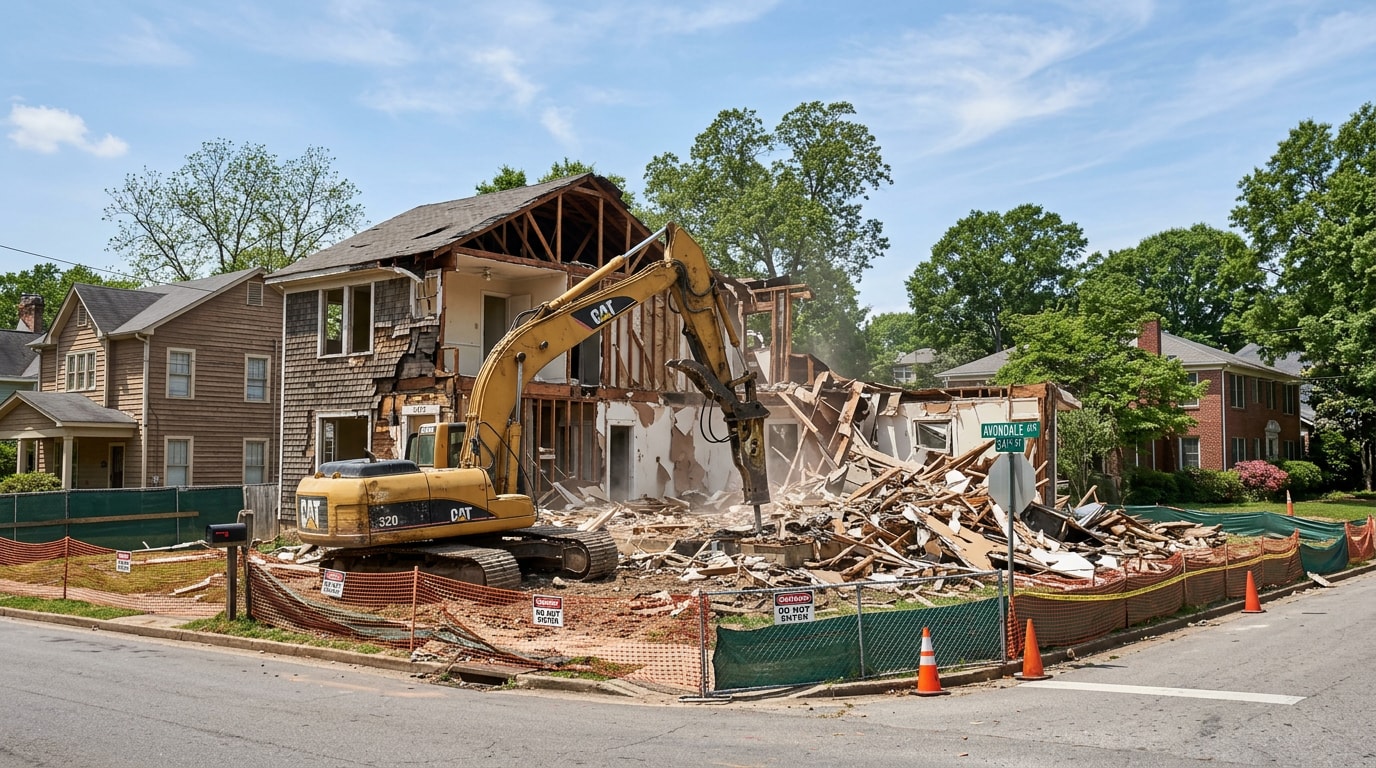
In practice, that means grading, drainage, earthwork, and utility installation — the groundwork that makes a property buildable in the first place.
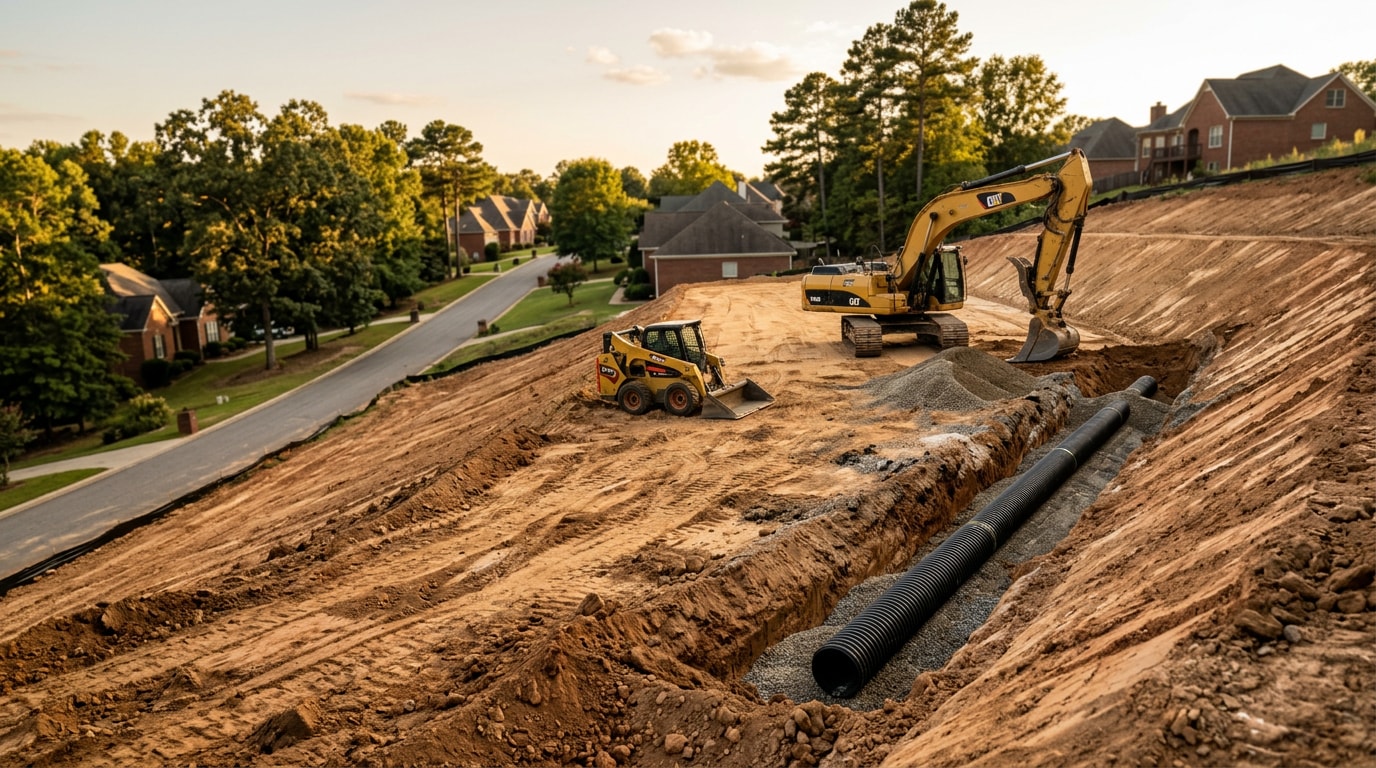
Picture a typical Vestavia Hills lot. Before any framing starts, a civil contractor grades the sloped terrain common to this part of the Birmingham metro, installs stormwater drainage sized for heavy Alabama rain events, and ties the site into sewer and water lines. That work determines whether the finished project drains properly, meets code, and holds up over time. Rush it, and problems surface years later as foundation cracks or standing water.
Civil Engineering Contractor vs. General Contractor: What's the Difference?
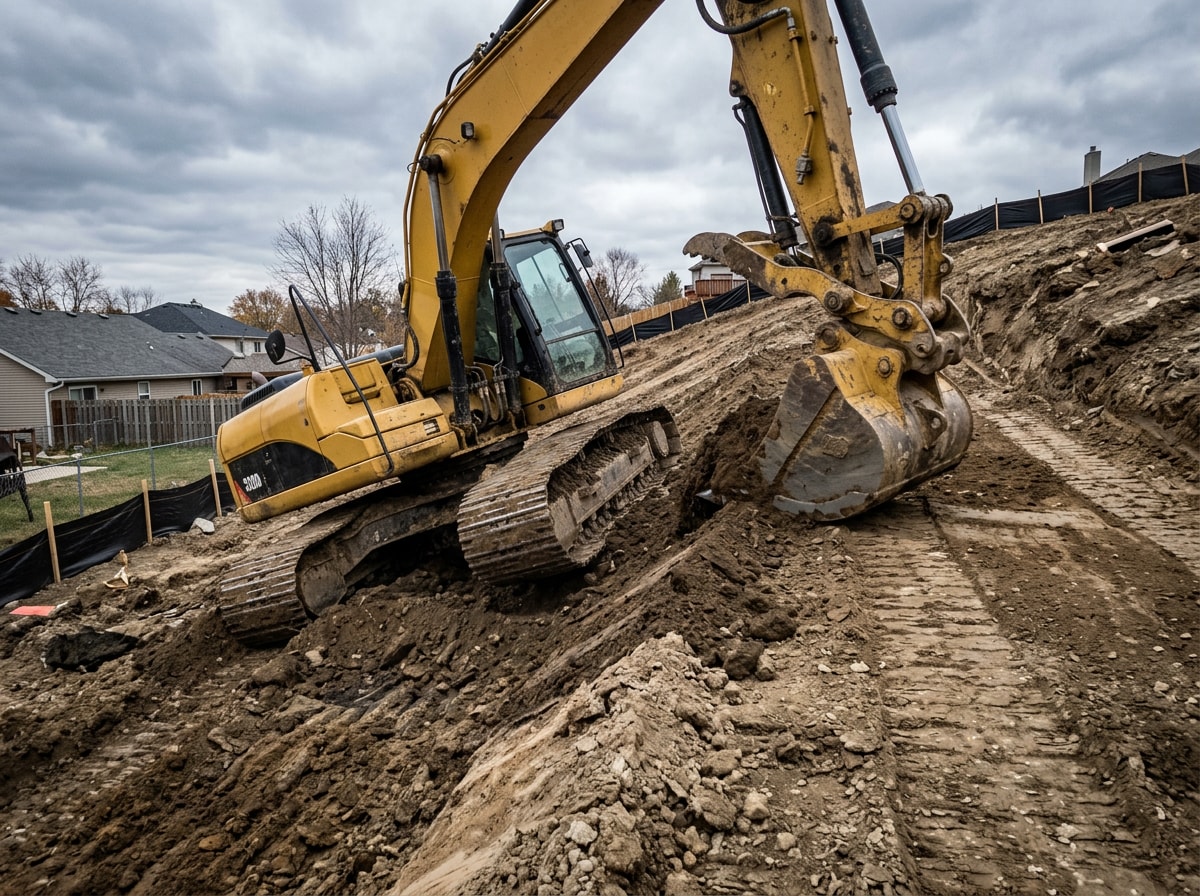
A general contractor builds the structure itself: framing, roofing, interior systems, finishes. That work happens above grade. A civil engineering contractor handles everything below grade: grading, drainage, utility trenching, and the earthwork that prepares a lot for construction.
| Civil Engineering Contractor | General Contractor |
|---|---|
| Works below and around the site | Works above the foundation line |
| Grading, drainage, earthwork, utility trenching | Framing, roofing, interior finishes |
| Prepares the lot so it's buildable and code-compliant | Builds the structure on the prepared lot |
| Often licensed under site-work or heavy civil classifications | Typically licensed as a general or residential contractor |
On larger projects, the two roles overlap. A civil crew might still be regrading and running utility lines while the general contractor's crew starts framing elsewhere on the same site. Assuming one company handles both is a common source of confusion during early planning, and it's worth clarifying before you request bids. If you're planning an addition or new build, our remodeling consultation service walks through which contractor type your scope actually needs.
What Types of Projects Does a Civil Engineering Contractor Handle?
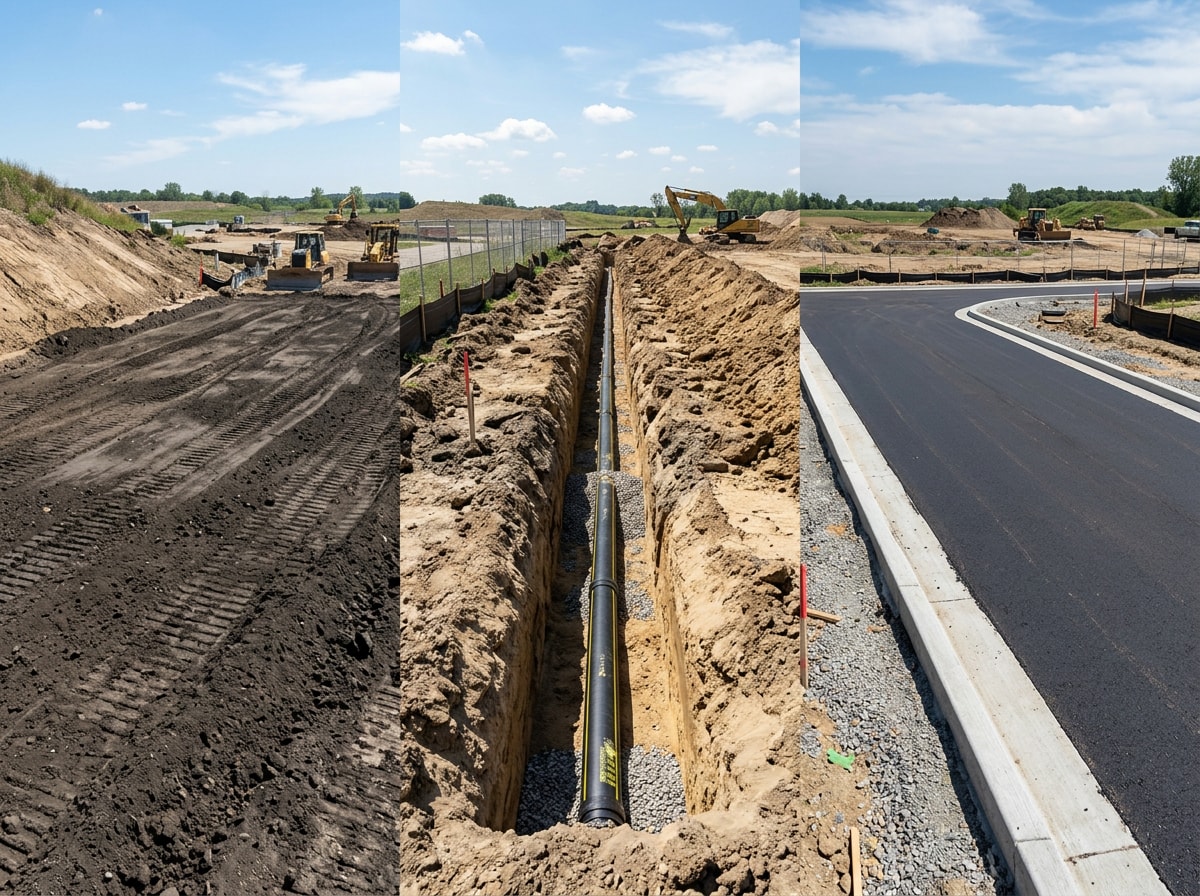
Civil engineering contractors handle infrastructure work at the land level. That covers nearly everything that happens before and alongside vertical construction:
- Site preparation and earthwork — clearing, excavating, and shaping land to the correct elevations
- Grading — establishing slopes so water moves away from structures instead of pooling against them
- Drainage systems — stormwater pipes, French drains, and retention basins for runoff control
- Utility installation — bringing water, sewer, and sometimes gas or electrical conduit to the property line
- Paving — driveways, parking lots, and access roads that close out the site-work phase
Not every contractor handles all five equally well, which is part of why vetting matters before you sign anything.
Alabama Licensing Rules for Civil and General Contractors in 2026
Many hiring guides still quote the old $50,000 licensing threshold. That number changed. Under Legislative Act 2024-277, effective October 1, 2024, the Alabama Licensing Board for General Contractors section of the Code of Alabama increased its minimum contract amount from fifty thousand dollars ($50,000) to one hundred thousand dollars ($100,000) , and the same change applies to subcontractors.
| Project Type | Licensing Board | Threshold |
|---|---|---|
| Commercial or industrial (prime or subcontract) | Alabama Licensing Board for General Contractors (LBGC) | $100,000 or more |
| Swimming pools | LBGC | $5,000 or more |
| Residential | Home Builders Licensure Board (HBLB) | Over $10,000 |
A contractor's bid falling below the state threshold doesn't mean licensing doesn't matter. It means the verification burden shifts more heavily onto you. Run any contractor's name through the Alabama Licensing Board for General Contractors search tool before signing, regardless of project size.
Why Local Terrain Matters in Vestavia Hills
Vestavia Hills sits in a part of the Birmingham metro shaped by Alabama's limestone-rich Valley and Ridge geology. That geology isn't unique to any one neighborhood, but it's a real regional factor: Alabama's state geological survey notes that land subsidence in the state is commonly tied to sinkholes forming in areas underlain by soluble carbonate rocks, with limestone-based terrain especially susceptible to dissolution and cave formation . A civil contractor who's worked grading and drainage jobs across this specific terrain is more likely to catch a soil issue or drainage quirk before it becomes a change order.
In our own project coordination across Vestavia Hills additions and remodels, delays almost always trace back to the same root cause: a drainage or grading plan that wasn't reviewed carefully before ground was broken, not a framing problem. That's a site-work issue, not a building issue, and it's exactly where a qualified civil contractor earns their fee.
Before comparing bids, check our Vestavia Hills service area page to confirm a contractor actually works this specific market rather than bidding on an unfamiliar lot from across the metro.
How to Hire the Right Civil Engineering Contractor
Once you understand what civil contractors do and why terrain-specific experience matters, the next step is a practical vetting process. These four checks keep you from learning the hard way that a contractor wasn't ready for your project.
Look for Relevant Experience and a Proven Track Record
Ask directly whether the contractor has completed projects similar in size and complexity to yours, and request examples or references. A strong track record on comparable work usually means fewer surprises.
Experience with similar projects teaches a crew to anticipate site-specific challenges, like unstable soil, unusual drainage patterns, or tight access, before they become costly problems. If a contractor can't point to relevant past work, treat that as a yellow flag and ask more questions rather than walking away immediately. Our projects portfolio shows the kind of documentation a contractor should be able to produce on request.
Verify Licensing, Bonding, and Insurance
Civil work involves excavation, utility tie-ins, and heavy equipment, so legal compliance isn't optional. Confirm the contractor's license classification matches your project type and that it covers the $100,000 commercial threshold if that applies to your job.
Beyond state licensing, confirm the contractor carries general liability insurance and, if employees are involved, workers' compensation coverage. Excavation work in particular carries real safety risk: OSHA's excavation and trenching standards require all excavations five feet deep or greater to use one of several protective systems, including sloping, benching, shoring, or shielding the trench . A contractor who can't speak to how they handle these requirements on site is a contractor you should keep shopping past.
Evaluate Equipment, Project Management, and Communication
Find out whether the contractor owns its own grading and excavation equipment or relies on rented machinery. In-house equipment generally means tighter schedule control and fewer weather- or availability-related delays.
Beyond equipment, a good contractor actively manages risk, coordinates subcontractors, and maintains daily site safety standards. None of that matters if communication is weak. Even the most experienced crew is a poor fit if they're slow to respond or vague about project status, so gauge responsiveness during the bidding process itself, not after you've signed.
Get Multiple Quotes and Sign a Detailed Contract
Compare at least two or three written quotes before committing, since pricing and scope assumptions vary significantly between civil contractors. A low bid that quietly excludes drainage work isn't actually a better deal.
Once you've chosen a contractor, insist on a detailed written contract specifying scope of work, timeline, payment schedule, and change-order terms. A clear contract protects both sides and gives you something concrete to reference if a dispute comes up mid-project.
If your project pairs site work with an addition, basement conversion, or full remodel, our team at The Old Town Remodeler coordinates both sides of that handoff. See how we approach home additions and basement finishing, both of which often require grading or drainage work before the visible construction begins. For a broader look at how site work fits into a larger build, our guide on metal building contractors in Birmingham covers a similar hiring process for structures that depend heavily on a prepared pad site.
Request a Quote Before You Break Ground
Civil work is one of the few parts of a project where a cheap mistake is genuinely expensive to fix later. If you're planning an addition, remodel, or new build in Vestavia Hills and want help thinking through the site-work side before you hire, request a professional quote and we'll walk through what your specific lot and project actually need.
FAQ
What is the difference between a civil contractor and a construction contractor?
A civil contractor specializes in land, infrastructure, and subsurface systems: grading, utilities, drainage, and roads. A general construction contractor typically builds the structure above grade. The two often work the same project at different stages.
What is the difference between a civil engineering contractor and a civil engineer?
A civil engineer designs the site plan, drainage calculations, and infrastructure layout. A civil engineering contractor executes that design in the field: excavation, grading, and utility installation. According to the 2025 median pay for civil engineers was $100,840 per year , reflecting the design side of the work; contractor pricing is a separate, project-based cost.
How much does it cost to hire a civil engineering contractor?
Costs vary widely based on site conditions, scope, and region. Pricing is typically structured as either a project-based bid or tied to the overall design and construction budget. For a project-specific estimate, request a quote directly rather than relying on a national average.
Do I need a licensed contractor for a small grading or drainage job in Vestavia Hills?
If the job is commercial or industrial and under $100,000, it falls below the state LBGC threshold, though many reputable contractors carry licensing anyway. Residential work over $10,000 generally falls under the Home Builders Licensure Board instead. When in doubt, verify status directly with the state board rather than assuming a small job is unregulated.
What skills should a civil engineering contractor have?
Look for proper licensing, in-house equipment, strong safety compliance, and clear communication. Experience with similar projects on similar terrain rounds out a well-qualified contractor.